
Community Asian Theatre of the Sierra (CATS), in collaboration with The Onyx Downtown, is presenting And Then They Came for Us, an award-winning documentary by Abby Ginzberg and Ken Schneider and staring George Takei. It screens on Wednesday, August 5, at 7pm, at the Nevada Theatre. The film was created in 2017 in response to President Trump’s “Muslim Ban”; its message is still relevant today, comparing the WWII incarceration of Japanese and Japanese Americans at War Relocation Centers (aka Internment Camps) to present-day times in America, targeting primarily immigrants and people of color.

Taiko drumming with David Yonenaka and Rebecca Duff, alumni of Grass Valley Taiko, will kick off the screening. After the film, we will meet Camp survivors and descendants for a thoughtful discussion and a Q&A. The film is appropriate for all ages. Join us for an evening of reflection and inspiration.
Our distinguished panel consists of Gordon Sakaue, Louise Sakamoto Chan, Jeff Ogata, and David Yonenaka.
The Panel

Gordon Sakaue is a retired math teacher from Lyman Gilmore Middle School in Grass Valley, who has been involved with CATS for almost 20 years. His parents were both interned at the Camps during WWII; his father was at Rohwer, Arkansas; and his mother was at Amache, near Granada, Colorado. Being an actor in the CATS’ 2015 production of Hotel on the Corner of Bitter and Sweet, a love story torn apart by war, it gave him the impetus to visit all ten camps in the United States, exploring and documenting their work in preserving history and educating the younger generations. Today in his retirement, he continues to visit, research, and stay connected to his sources at many of the ten camps. Once a teacher – always a teacher – as he remains connected to students through tutoring and supporting school theatrical productions.

Louise Sakamoto Chan was a toddler, a third-generation Japanese-American from San Jose, when she was interned with her family at Heart Mountain, in Wyoming. After WWII, they lived in Des Moines, Iowa, and ultimately returned to San Jose. Louise pursued a career in occupational therapy. She and her husband Robert Chan, who served in the U.S. Naval Medical Service Corps, lived in Japan, Berkeley, Bethesda, and San Diego while raising their two daughters. After 30 years in San Diego, they retired to Lake of the Pines, in Auburn, where she enjoys tai chi, golf, bocce ball, line dance, and helping to promote CATS shows and activities. Louise recently returned from a pilgrimage to Heart Mountain.

Jeffery Ogata is the son of a Manzanar/Tule Lake “no-no boy” and renunciant. Both relocation centers are in California. He recalls his late father’s stories about life in Manzanar, the hardships as well as the fun times, but not that much about Tule Lake. His father did admit to “throwing away” his citizenship and getting it back, but it wasn’t until Jeff recently retrieved documents related to the restoration of his father’s citizenship that he discovered several unknown “truths.” He believes history must not be forgotten and takes advantage of opportunities to help educate others about the horrible incarceration of first-and-second generation Japanese-Americans and its effect on the following generations. Jeff was cast in two recent CATS productions, is an avid sports fan, and a filmmaker. He was also cast in the historical drama feature film, Kintsukuroi, directed by sansei filmmaker Kerwin Berk, which had principal scenes of the U.S. internment camps and World War II battlefields filmed throughout northern California in 2023. Last, but not least, he was seen in Row Don’t Drift about a Japanese-American draft resister.

David Yonenaka is a third generation Japanese American (Sansei), whose paternal grandfather’s family, including David’s father and two oldest brothers, were incarcerated at the Manzanar War Relocation Center at the start of WWII. He never learned much about what life was like in the Camp, since like most Nisei (second generation), his father wanted only to leave the past behind and move forward (Shikata ga nai). David’s father (Tamotsu) and cousin (Jimmy) enlisted in the U.S. Army to both show their loyalty to the United States and to end their incarceration. David has been a long-time member and performer with Grass Valley Taiko, under the leadership of Sensei Mitzi Garnett. He recently had the honor of performing Taiko as a supporting musician in the CATS production of Rashomon.
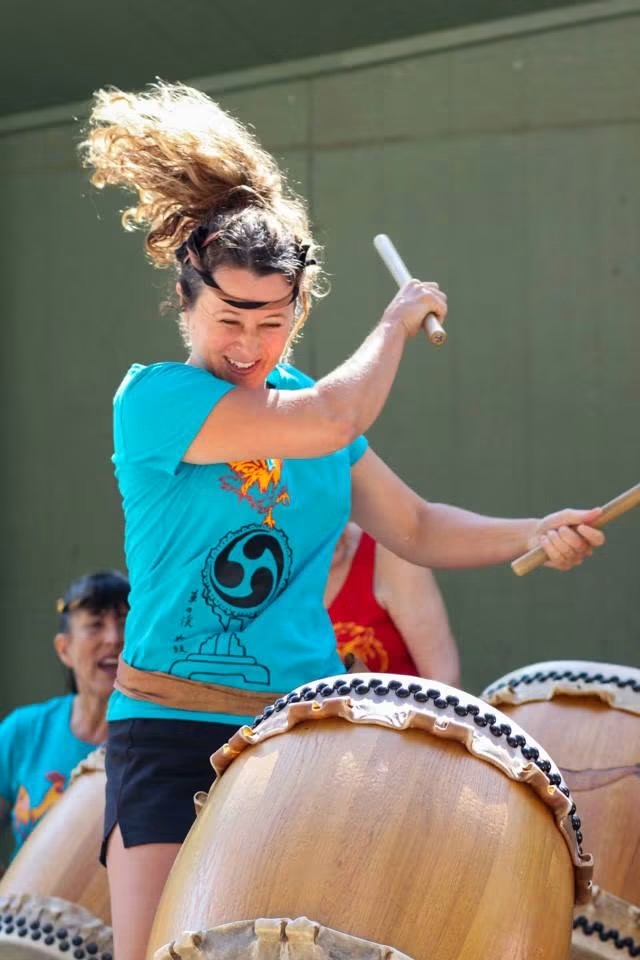
Rebecca Duff is one of the taiko drummers at the screening. Her taiko journey began in 2004 in Mt. Shasta under the direction of taiko pioneers Jeanne Mercer and Russel Baba, where she performed alongside some of America’s founding taiko groups. Captivated from the moment she first saw the art form, Rebecca knew it was her calling. In 2009, she moved to Grass Valley and joined Grass Valley Taiko. She was a performing senior member of the group, continuing her growth under the tutelage of Sensei Mitzi Garnet. Beyond the drum, Rebecca is a dedicated art teacher at Grass Valley Charter School and a mother of two teenage boys. She channels her creative energy into nearly everything she does. An avid wilderness enthusiast, she recently celebrated a major milestone by backpacking the entire 176-mile Tahoe Rim Trail alongside a close girlfriend and her faithful dog. Rebecca brings this same spirit of adventure, endurance, and artistry to every performance.
The Japanese Incarceration During WWII
During World War II, the U.S. government, through Executive Order 9366 by President Roosevelt, forcibly relocated and incarcerated approximately 120,000 Japanese Americans, primarily from the West Coast, into internment camps. These camps, officially called Relocation Centers, were located in remote areas across California, Arizona, Wyoming, Colorado, Utah, and Arkansas. The ten major camps included Manzanar, Tule Lake, Topaz, Gila River, Poston, Granada (Amache), Minidoka, Heart Mountain, Jerome, and Rohwer.
In addition to these primary camps, there were temporary Civilian Assembly Centers, often set up at racetracks or fairgrounds, where the Japanese were initially held before being transferred to the permanent relocation centers. There was also detention camps for individuals considered disruptive or of special interest to the government, and Citizen Isolation Centers for those deemed problem inmates. Some federal prisons and immigration detention stations were used to house Japanese Americans, as well as German and Italian detainees
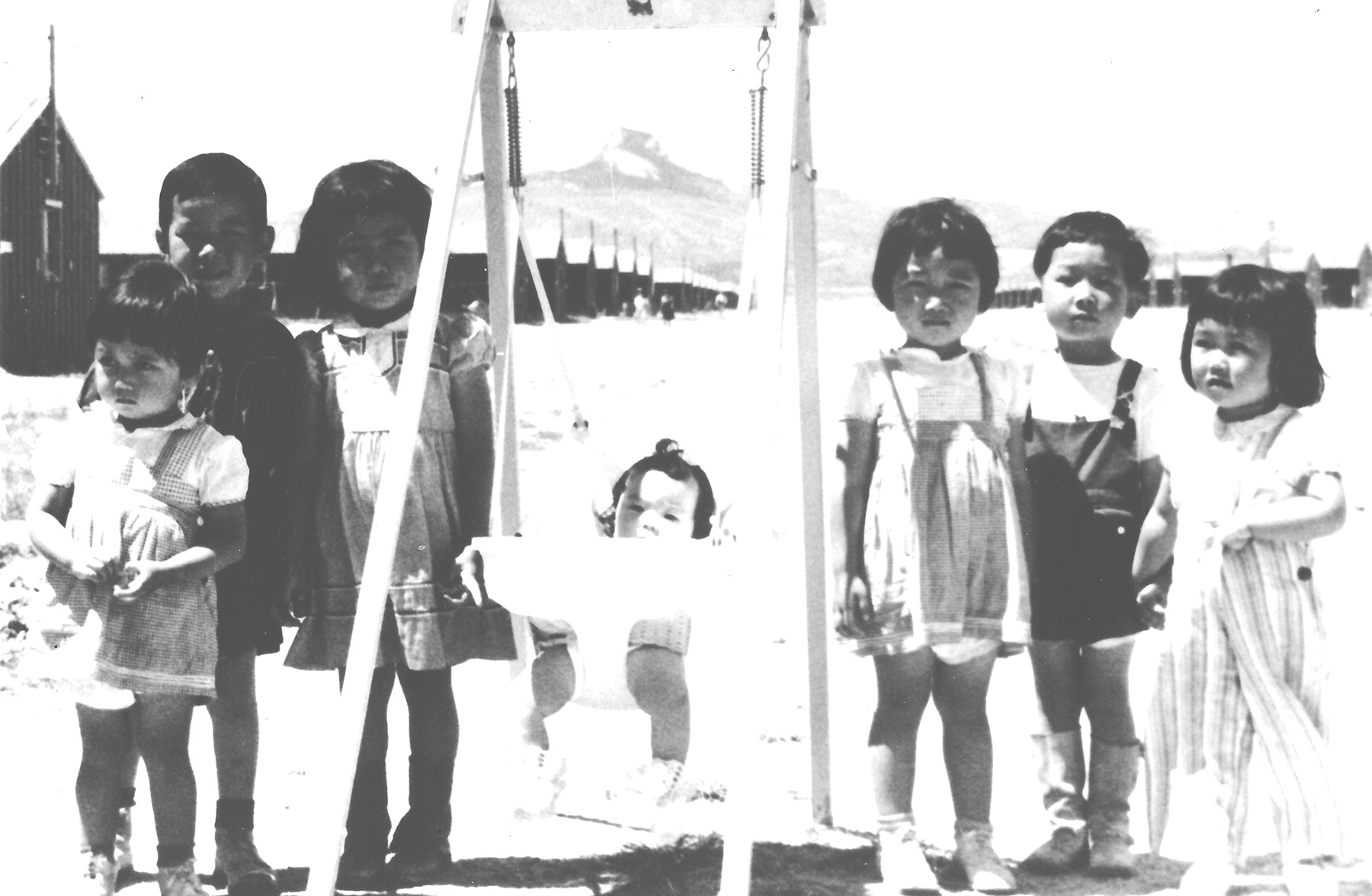
The internment system was a response to wartime hysteria and racial prejudice following the attack on Pearl Harbor on December 7, 1941, and while the camps were heavily guarded and isolated, residents established schools, newspapers, and community activities within the camps
The legacy of these ten major camps remains a significant chapter in U.S. history, highlighting the impact of government policies on civil liberties during wartime.
Why History Matters!
This documentary is part of CATS’ Cultural Enrichment Series. Not only does CATS aim to entertain on stage with Asian-focused theatrical productions, but it also aims to educate, especially with stories rooted in history and humanity, where, through understanding, we may continue to inspire and motivate. With this film, CATS’ mission is to build resilience through history, education, and the arts.
Discounted advance tickets are at Theonyxtheatre.com. Doors open at 6:30 p.m. for the 7:00 p.m. screening and program on Wednesday, August 5. Tickets may also be purchased at the door of the Nevada Theatre.