
Marysville, Yuba County – Local agricultural officials are urging residents to take immediate precautions after the invasive glassy-winged sharpshooter was detected on grape plants sold at Costco stores.
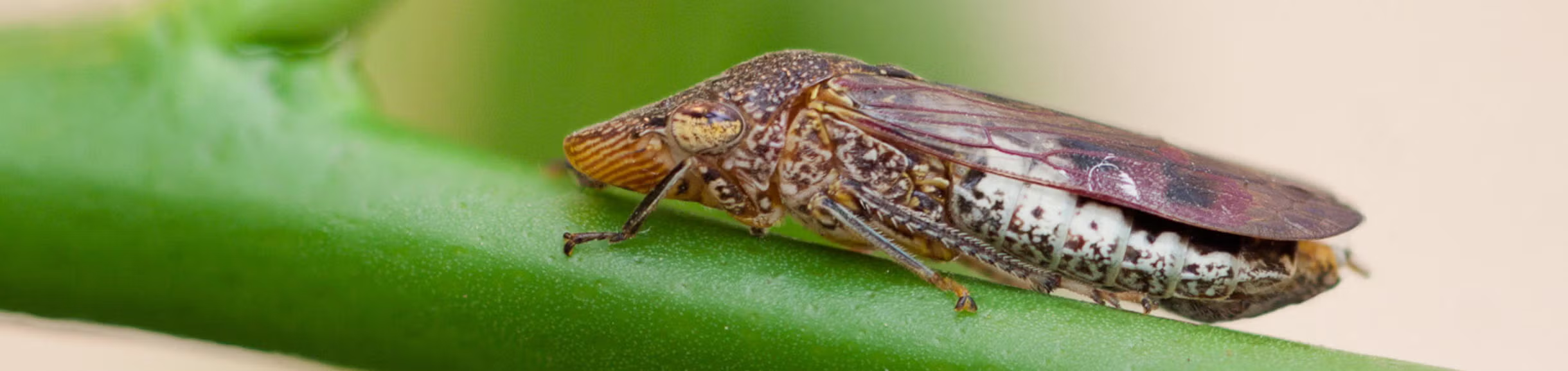
This leafhopper spreads Pierce’s disease, a bacterial infection that is fatal to grapevines and can also damage almond, citrus and ornamental plants, posing a significant threat to California agriculture and home gardens.
Anyone who purchased grape or citrus plants from the Marysville Costco store beginning May 21 is asked to help prevent further spread of the pest by contacting their local county agricultural commissioner’s office.
“Glassy-winged sharpshooters pose an immediate and serious threat to vineyards because they transmit the bacterium Xylella fastidiosa which causes the deadly Pierce’s disease in grapevines” says Stephen Scheer, Yuba County Agricultural Commissioner. “We are asking for community-wide cooperation to help limit this risk. If you recently purchased grapevines or citrus plants at Costco, please contact your County Agriculture Department so we can safely dispose of vines and inspect citrus plants.”

Officials emphasized these are grapevines intended for planting in home gardens and landscaping, not grapes sold for consumption.
Residents who purchased grape or citrus plants from the Marysville Costco should:
- For grapevines: place two garbage bags over plants and secure them tightly.
- For citrus: follow the contact information below to schedule Agriculture Department inspection.
- Do not attempt to return, transport or relocate the plant.
- Do not place the plant in the trash or compost bin.
- Contact your County Department of Agriculture:
- Yuba County at 530-749-5400 or email yubaag@yuba.gov
- Sutter County at 530-822-7500 or email sutterag@co.sutter.ca.us
- Colusa County at 530-458-0580 or email ccag@countyofcolusaca.gov
- Nevada County at 530-470-2690 or email agdept@nevadacountyca.gov
Native to the southeastern United States and Mexico, the glassy-winged sharpshooter was first detected in California in the 1990s and has since become established in portions of central and southern California. The glassy-winged sharpshooter poses a significant threat to California’s grape industry and is also known to damage ornamental landscapes by feeding on 250 plant varieties.
Agricultural officials are urging residents to contact their local agriculture department if they purchased the grape plants in question, to prevent the glassy-winged sharpshooter’s spread into the Bay Area.