
Nevada City, Calif., April 10, 2026 – Have you ever noticed that sometimes the quieter voices in the room often have some of the most important things to say? This seemed to be the case in 1856, when the American scientist Eunice Newton Foote presented evidence that carbon dioxide could warm Earth’s atmosphere — an insight largely dismissed at the time. Her experiments formed the basis for understanding that more CO2 in the atmosphere could lead to a warmer climate.
This week, The Memory of Darkness, Light, and Ice, produced by Metamorph Films, LLC and funded by the National Science Foundation, has been nominated for the News and Documentary Emmy® Award in the category of “Outstanding Science and Technology Documentary”.

Directed by former evolutionary biologist Kathy Kasic, the film features surprising discoveries about the Greenland Ice Sheet by climate scientists. A total of 17 academic and scientific research institutions were involved in the film production. Many scientists are included in the film, each with narration in their own voice. Another 10 students were involved in the production of the film, uniting a convincing story with awe-inspiring imagery of the Greenland Ice Sheet. Taken together, this creates a film experience that informs both senses and mind.
Kasic, who was in Nevada City at the Wild & Scenic Film Festival this February to discuss filmmaking as an opportunity to mobilize for the environment and the filmmaking process, sees film as an opportunity to provide “sensory vérité” … cinematography, aiming to make viewers feel the environment as well as understand it. The Memory of Darkness, Light, and Ice was a Wild & Scenic 2025 film selection, winning the John de Graaf Environmental Filmmaking 2025 Award Wild & Scenic Film Festival — the festival’s top honor for environmental filmmaking. It also won Best Feature Documentary at the 2024 Raw Science Film Festival.

This film tells a story in a level voice, however, the potential impacts that the team of scientists discover while studying the Greenland Ice Sheet are far from quiet truths—the facts they compile point to radical changes in both the future and the past of our planet. Rather than inflame, the vast quiet icefields communicate mystery and beauty — yet this visual stillness stands in sharp contrast to the urgency of the science being conducted in leading research labs, which reveals the fragility of an interconnected world. That tension between what we sense and what we know drives home the message in a way that ranks among cinema’s most effective tools for truth-telling. Simply put: the volume of ice that could be lost may permanently reshape coastlines and landmasses across the planet.

The cores, drilled during science projects during the Cold War, using today’s scientific technology resources, reveal that parts of the ice sheet had completely melted 416,000 years ago, when carbon dioxide levels were half what they are today. Kasic sees this as the consequences of today’s rising CO2 levels. “It means we are facing massive consequences by doubling our CO2, because we know that carbon dioxide in the atmosphere warms up the planet,” Kasic said in a statement. “If you take the amount of ice that has melted in Greenland and laid it on top of Texas, you’d get ice 31 feet thick. It’s a call to say, we can’t ignore this anymore.”

This film is both a meditation on humans’ planetary impact, the beauty and longevity of the planet itself, and a stark reminder of the longer climate timeline.
The Memory of Darkness, Light, and Ice serves as both a scientific revelation and a call for urgent climate action, while taking us on a moving journey into Greenland’s vast and unspoiled lands.
Kasic notes in the film, “Paradoxically, our ability to look forward in time is best aided by looking backwards in time.”
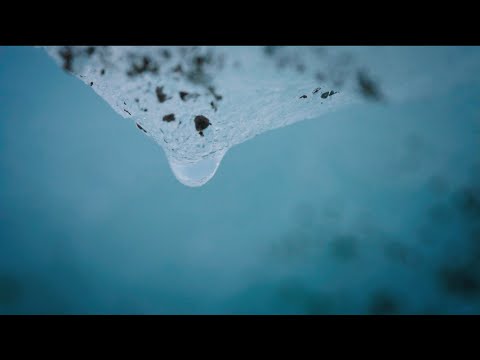
Learn more and see all links to stream the film at: https://thegreenlandclimatefilm.com
17 Collaborating Institutions:
California State University, Sacramento; Centre de Recherches Pétrographiques et Géochimiques, Nancy-CNRS; Centre for Ice and Climate, Niels Bohr Institute, University of Copenhagen; Geological Survey of Denmark and Greenland (GEUS); Lamont-Doherty Earth Observatory of Columbia University; Montclair State University; NASA’s Goddard Institute for Space Studies; Purdue University; State University of New York at Buffalo; The University of Texas Institute for Geophysics; U.S. Geological Survey; Université Libre de Bruxelles; University of Connecticut; University of Vermont; University of Washington; Utah State University; Williams College.
About The Director:
Kathy Kasic is a filmmaker and principal of Metamorph Films, as well as an Associate Professor of Film at California State University, Sacramento. Kasic founded Metamorph Films in 2006 as an independent production company with a mission to create films of art and science devoted to engendering a stronger scientific and environmental understanding in our society. Her productions have appeared at international festivals, museums, and on television and streaming platforms (BBC, Arte, PBS, National Geographic, Curiosity Stream, Discovery, Amazon), winning numerous awards.