
If you are interested in re-creating native habitat and/or supporting the local food web, I encourage you to think about plants that provide habitat by attracting pollinators and herbivorous insects. Home grown habitat is the practice of creating and maintaining native plant gardens. It emphasizes the use of native plants that have co-evolved with the local environment and the removal of non-natives, especially invasives. This includes the reduction of ornamental plants. Home grown habitat aims to create sustainable habitat that supports a variety of species from pollinators to native insects, and promotes and protects biodiversity. Lastly, it involves a change in perspective or attitude towards local natives and the acknowledgement of individual responsibility
This change in perspective asks us to see native habitat as something important to us and to our home gardens, not something only occurring beyond our property, or something out in the wild. It asks us to reevaluate our lawns and our ornamental plants, to include these beneficial plants that support the food chain. We need to accept our local natives as they are, even if they look tried at the end of the summer, and instead value all they do to support insects, birds and other wildlife. Watering and pruning can go a long way to extending the season and keeping these plants tidy. Lastly, what we do in our yard, effects other yards and the foodweb. By removing invasives, we curtail their spread and by planting local natives it provides pockets of habitat or connections between native preserves, where there are now none.
We now understand a lot more about how dependent local plants and local insects are on each other. Many bees can only use the pollen or nectar of a single species, many moths and butterflies can only lay their eggs on very specific plants and their caterpillars can only eat those specific plant species. Douglas Tallamy (Author and Entomologist) estimates that 90% of herbivorous insects can eat only the native plants they share an evolutionary history with. NINTY PERCENT!!! Without their local native plant, these insects and other invertebrates will not reproduce.
Because of our tendency to have lawns or beds of ornamental or non-local flowering plants, many of the plants our local insects need are not present. Without these plants, the insects are not able to complete their life cycle or to contribute to the food web (as in providing caterpillars for nesting birds). Which is why declines in our insects and nesting birds have become so significant. Lose the plant, lose the pollinator, lose the pollinator, lose the plant.
The plants that are essential for providing these habitat values are keystone species. Keystone species are local native plants that support a disproportionately high number of insects and other wildlife, forming the foundation of a heathy local food web.
The Redbud Chapter fall plant sale will have many keystone species available to selection from. Oaks are some of the best keystone species. We will have a few different species of oaks, including Leather oak, (Quercus durata), a slow growing, local native that only gets to an estimated 12 feet tall and should fit in a small landscape area.
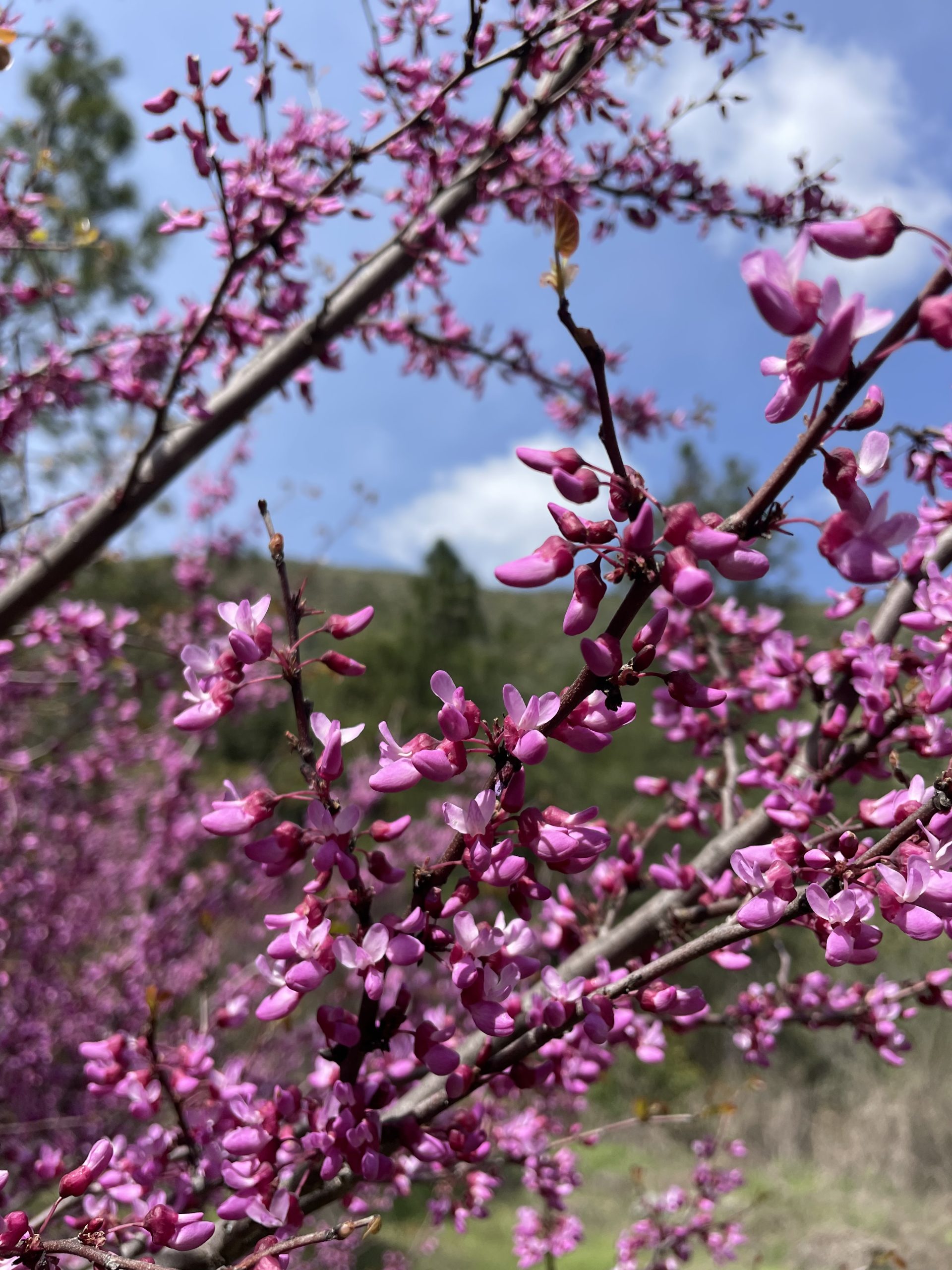
The sale will have many different keystone shrubs: redbud (Cercis occidentalis), California hazelnut (Corylus cornuta), hoary coffee berry (Frangula californica ssp. tomentella) , buckbrush (Ceanothus cuneatus), deer brush (Ceanothus intergerrimus), hollyleaf redberry (Rhamnus ilicifolia) and common snowberry (Symphoricarpos albus). Many of these have attractive blooms that are present from early spring to late fall and are alive with pollinators. Were excited that our sale will include creeping sage (Salvia sonomensis), a spreading groundcover, with great white to blue flowers. This plant supports an estimated 239 insects and other wildlife. It is a great addition to any garden.
The fall plant sale will have all the favorite perennials that are also key stone species: goldenrod (Solidago velutina ssp. californica), yarrow (Achilla millefolium) and common aster (Symphyotrichium chilense). All of these will spread, but can be easily controlled. We will also have a variety of native bunch grasses that add interest and are good for wildlife.
If you want more information, please see www.Calscape.org. Calscape will show you the estimated geographic range of the plant you’re interested in. Under the heading of Wildlife Supported, you will see the number of confirmed and the number of likely butterflies and moths that are supported by the plant you’re interested in.
Thank you! When you plant local native plants, you save everything else!
Redbud CNPS Fall Native Plant Sale October 3rd
Date: October 3rd
Time: 9 a.m. to 3 p.m.
Location: Online store (open when sale begins): https://cnps-redbud.square.site/
URL: https://chapters.cnps.org/redbud/plant-sale-fall/