
After receiving a $229,106 Regional Forest and Fire Capacity Program subgrant from the Sierra Nevada Conservancy (SNC) in 2024, the Nevada County Office of Emergency Services (OES) expanded its forest-management staff and accelerated planning and implementation of critical landscape-scale treatments in high-fire risk zones, especially those outlined in Nevada County’s recently updated Community Wildfire Protection Plan (CWPP).

“Prior to our CWPP update and the Regional Forest and Fire Capacity Program our approach to pursuing funding was opportunistic,” said Alex Keeble-Toll, director of Nevada County OES. “Granted in a landscape where 92 percent of the population lives in high or very high fire hazard severity zones there is no ‘wrong’ place to go for wildfire mitigation. Our CWPP, however, really allowed us to drill down into the where, not just places where we know the wildfire hazard is most significant on the landscape, but also the places that our community wants to see protected.”
The California Department of Conservation leads the Regional Forest and Fire Capacity Program, which is designed to support local and regional efforts to assess the resilience of forests and communities, identify forest health and wildfire-prevention priorities, build local partner capacity, and help organizations and tribes develop fuel-reduction projects across the state. As a subgrantee, the SNC is responsible for allocating program funds across the Sierra-Cascade.
County Hires Forest Management Advisor
Nevada County OES first used the capacity-building grant from the SNC to hire a full-time forest management advisor. Working closely with the county’s wildfire coordinator, this new position took charge of collaborating with partners and interested stakeholders, planning and implementing landscape-scale projects in the CWPP, and serving as project manager over fire-mitigation and forest-health projects.
“By hiring a Registered Professional Forester with our funding, we were able to be thoughtful about the ‘how’ we go with our projects. Not only in terms of what scale, but what environmental compliance process, and what treatment design,” added Keeble-Toll. “We are now capable of getting landscape-scale projects on the ground and we are uniquely positioned to partner with the right entities, including federal land managers, to make this happen.”
With the forest management advisor on board, the county, with the aid of Firewise Communities, local tribes, and other stakeholders, developed a five-year CWPP project pipeline strategy. This strategy allows Nevada County OES to effectively implement fuel-reduction work.
Project Planning and Implementation Ramp Up
Some of the projects include a 117-acre roadside hazardous fuels-reduction effort southwest of Stampede Reservoir and a 365-acre roadside shaded fuelbreak along Cruzon Grade Road along San Juan Ridge. The county agency is also in the process of completing a five-mile roadside shaded fuelbreak just west of Grass Valley that runs perpendicular to highways 49 and 20, and has completed the first phase of reducing fuels on 1,136 acres near Woodpecker Ravine.
Projects in the planning phase include fuel-reduction on 1,100 acres in the Lake Wildwood community in Penn Valley and 5,600 acres on private and Bureau of Land Management land on the rugged South Yuba River rim.
With nearly 2,240 miles of private roads in the county, the agency has also developed a Critical Evacuation Roadside Hazardous Fuel Removal Microgrant program that is funding Firewise Communities, tribal organizations, nonprofits, HOAs, and other eligible participants to reduce overgrown vegetation on what may be vital evacuation routes in the event of a wildfire. This project is slated to wrap up March 2027.
In July, Nevada County OES launched its fourth Good Neighbor Agreement with the Tahoe National Forest. Coupled with $7 million in National Forest Foundation funding, the Evacuation Safety Corridor and Protection Enhancement (ESCAPE) agreement will allow for treatment along key roadways across 1,700 acres. The county aims to implement an innovative model to realize and reinvest timber revenue in wildfire mitigation as an outcome of this project.
Wildfire Defense for Town of Washington
All of this forest and wildfire-resilience planning and implementation work took place with the help of the 2024 RFFCP subgrant. The recent expanded capacity allowed the county to apply for and receive an SNC Wildfire and Forest Resilience grant in March of 2026 for just over $1 million to implement work that will help protect the town of Washington, one of the most high-fire risk towns in the Sierra-Cascade. Through thinning of overgrowth forest on 172 acres, crews will reduce fuels and implement fuelbreaks along critical ingress and egress routes in and out of the town.
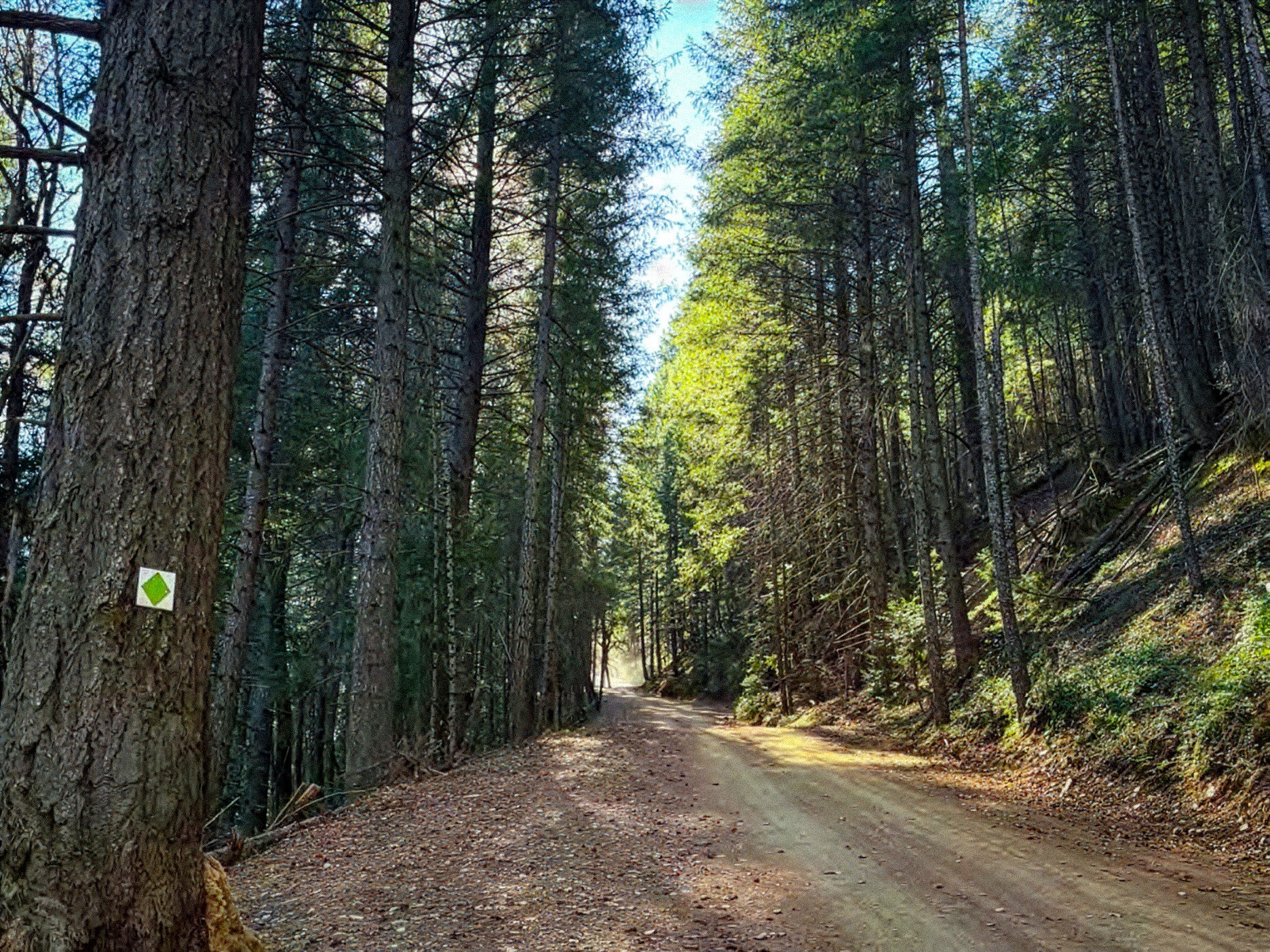
“The town of Washington and the surrounding Tahoe National Forest lands represent one of Nevada County’s highest wildfire-risk areas, as identified in the 2025 Nevada County Community Wildfire Protection Plan,” said Brian Estes, retired Unit Chief, CAL FIRE Nevada Yuba Placer Unit. “This project will strengthen community safety and resilience by creating a wildfire holding feature and simultaneously improving ingress and egress routes along Washington and Alpha roads, key corridors for evacuation and emergency response.”
Situated on the South Yuba River, Washington hosts as many as 1,500 visitors daily every summer for a variety of recreational activities, including camping, hunting, river activities, and off-road vehicle use, which is a common ignition source.
Fuels-reduction and fuelbreak work in the project area will be completed with the help of the land management crew from the tribally led nonprofit, HUŚWEJ (formerly the California Heritage: Indigenous Research Project), which supports the Nevada City Rancheria Nisenan Tribe.
“We are particularly encouraged by the focus on engaging a tribally led workforce in forest-stewardship activities, and the protection of high fire risk communities. These initiatives align with our organization’s mission to empower the community through environmental stewardship and economic support,” said Executive Director of HUŚWEJ and Tribal Spokesperson for Nevada City Rancheria, Shelly Covert.
Important Fuel-Reduction Work Continues
In just two years since the SNC awarded Regional Forest and Fire Capacity Program funding, the Nevada County OES has increased not only forest-health and community-protection work, but also the strategic locations and scale at which these critical efforts are needed. Community outreach and collaborative efforts with vital partners, tribal entities, federal land managers, and the public are also being optimized.
Because of recent developments like these, times, as Keeble-Toll put it, are changing.
“Building relationships with partners, funders, and the community to not just get one project done but implement a long-range vision for landscape-scale resilience – that is magic and that is what we need to be doing,” Keeble-Toll concluded. “I truly believe we live in exciting times – I look around and I see all these brilliant peers, and we are brainstorming and laughing and struggling to figure it out to make important things happen.”