
Insights from a recently held global collaboration workshop on fatal whale-vessel strikes are poised to strengthen protections for the magnificent creatures around the world.
Co-hosted by UC Santa Barbara’s Benioff Ocean Science Laboratory (BOSL) and the International Whaling Commission (IWC) and held at the International Maritime Organization’s London headquarters, the workshop brought together experts from science, policy and industry to get a sense of the worldwide problem of whales and ships colliding. These incidents occur as the giant mammals and even bigger shipping vessels vie for space along some of the world’s most active shipping lanes, with tragic results.
“It is difficult to estimate how many whales are killed every year by ship strikes, in part because many whales sink from a fatal collision,” said BOSL Director, Professor Douglas McCauley. “But, if we look at estimates of whale-ship strike deaths in the best-studied parts of our planet, it seems likely that thousands of whales die in collisions every year.”
Indeed, 118 whales have been reported struck and killed off the West Coast of the United States from 2015 to 2024, the majority of them off the coast of California, which hosts the busiest shipping port in the Western hemisphere (Los Angeles), in addition to other major ports in Long Beach and the Bay Area, though the actual number is likely to be much higher, as these accidents often go unreported. Along the East Coast, ship strikes also pose a critical threat to the endangered North Atlantic right whale.
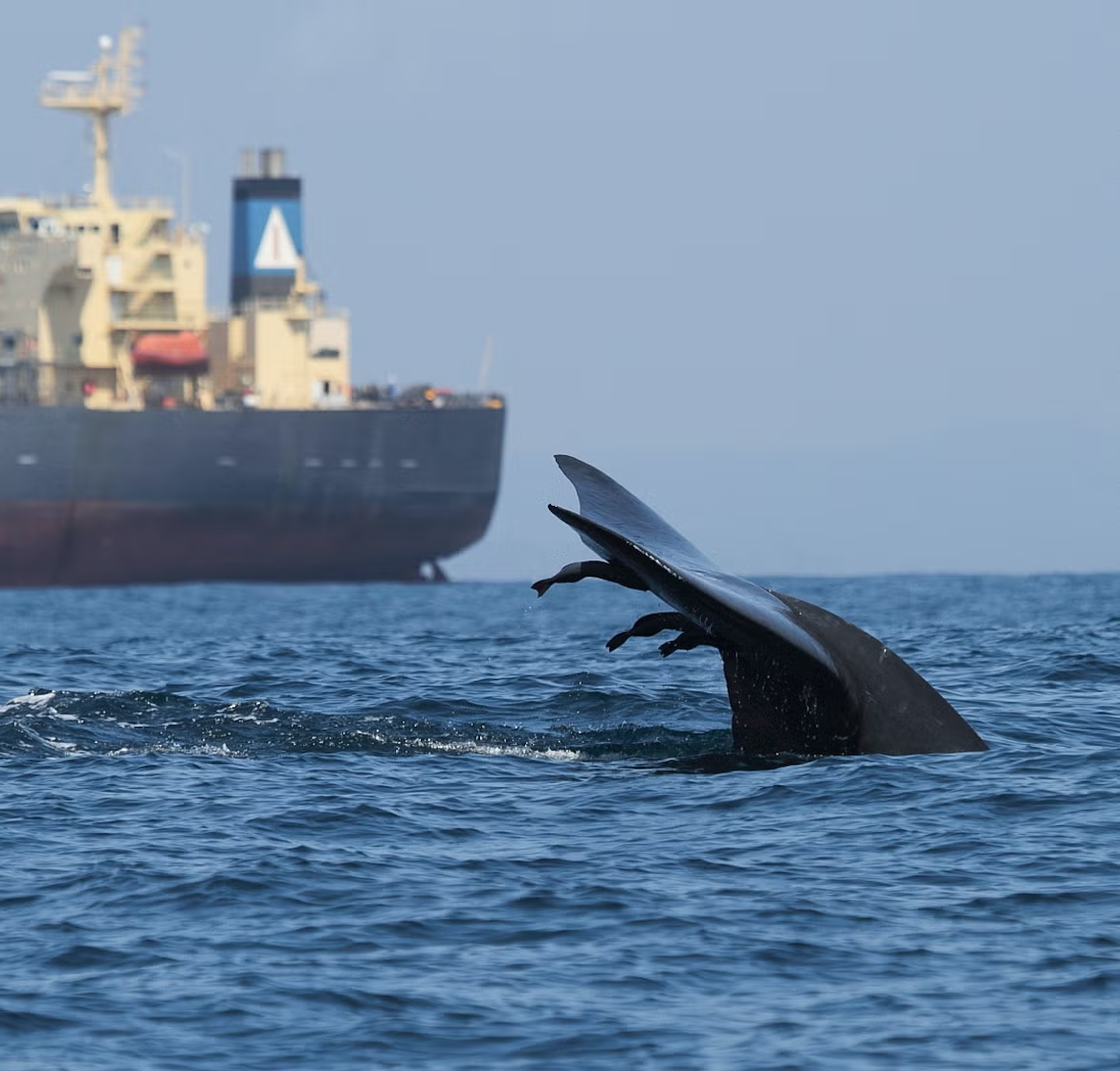
But the problem is not isolated to U.S. coastal waters. BOSL scientists and fellow researchers in a 2024 study published in the journal Science found that whale migration routes, which tend to hug the world’s coasts, overlap with commercial shipping routes around the world — a situation that puts the animals in constant danger of being killed or seriously injured. This paper, the first global mapping of whales versus ships, provided the foundation for this workshop. Participants from a variety of organizations, including the World Wildlife Fund, the World Shipping Council, the United Nations and the U.S. National Oceanic and Atmospheric Administration met to create action plans for collision hotspots.
“Understanding what options are available and what has worked elsewhere is the first step toward making the problem feel solvable.”
One strategy that’s been successful is collaborating with shipping vessels to get them to slow down in high-traffic areas. Ship captains are alerted to additional traffic in their shipping lanes via Whale Safe, a whale-monitoring program developed by the BOSL scientists that combines citizen science with acoustic monitoring technology to give near real-time updates on the presence of whales in the Santa Barbara Channel in a user-friendly format. The program also tracks ships through their automatic identification system data — a kind of GPS for marine vessels — and issues “report cards” for these ships and their companies, based on their cooperation with voluntary speed limits of 10 knots or less in the Channel. The technology is being used in a State of California-supported program called Protecting Blue Whales and Blue Skies, a partnership between government agencies, foundations, environmental nonprofits and BOSL. It not only monitors whales but also seeks to reduce air pollution from oceangoing vessels and reduce underwater noise, which can interfere with marine mammals’ communication and navigation.
However, shipping speed limits are not a universal solution.
“There is no one-size-fits-all solution for preventing whales from being run over — what works in California may not work for high-speed ferries operating in the Azores or the sailboat racing community in Europe,” said BOSL project scientist Rachel Rhodes. Other measures range from moving shipping lanes to equipping vessels with whale detection technology like thermal sensors, she added.
The workshop brought together diverse stakeholders from 10 countries and five continents to align and share perspectives and insights, Rhodes said, while creating partnerships for research collaboration.
“Understanding what options are available and what has worked elsewhere is the first step toward making the problem feel solvable,” she said.
Researchers will present these metrics and methods as guidance to the IWC Scientific Committee meeting this month in an effort to create region-specific workshops and action plans to reduce ship strike incidents.